
The Ultimate Checklist for Buying Vintage Textiles Online
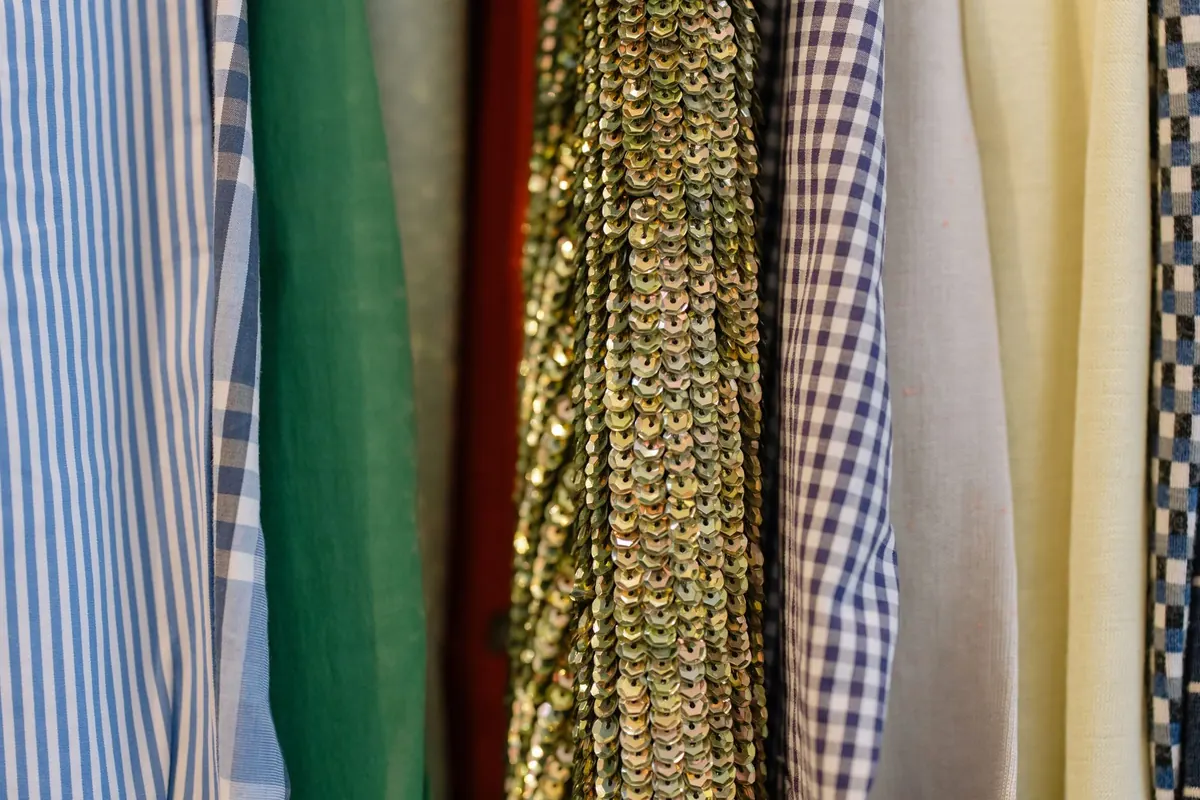
Buying vintage fabric online is a small act of faith. You are trusting a stranger's photographs, a description written in a hurry, and a postal service that has never once folded a parcel kindly. The reward is cloth you simply cannot buy new: a 1950s cotton in a print nobody has reissued, a length of wool suiting with a weight and drape modern mills rarely bother with.
Faith is fine, but a checklist is better. The checks below take a few minutes each, and together they save you from the two disappointments that sour vintage textile buying: paying serious money for something too damaged to use, and finding the fault after the returns window has shut.
Read the listing like an inspector
Sellers photograph fabric the way estate agents photograph flats — from the most flattering angle, in the kindest light. That is not dishonesty, but it does mean asking for the shots that are missing.
Request a photograph of the cloth held against a window. Backlighting exposes thin patches and pinholes that disappear in flat lighting. Ask for the reverse, where fading, repairs and print bleed-through tend to show. Ask for the selvedge, and for any flaw to be photographed close up with a ruler or coin in frame for scale.
Then trust numbers over adjectives. A listing that calls something a "large piece" without measurements is a listing you will end up chasing. Width across the selvedge and length along it are the only figures that tell you whether you can cut a dress, two cushions or nothing at all — and whether the piece is one continuous length or three scraps sold as a job lot.
Condition: decide what you can live with
Every vintage textile has a history, and few histories are spotless. The question is not whether a piece is perfect — it won't be — but whether its faults sit somewhere that will not matter to your project.
Faults that are usually workable
- Small holes or splits inside a seam allowance, where the pattern will cover them.
- Fading along a selvedge you intend to cut away.
- Storage creases, which generally fall out with a gentle press or a few days hanging.
- Light foxing — the small brown spots common on old cotton and linen — if you plan to use the reverse or dye the cloth.
- Scattered, tiny moth grazing if you are making something small.
Faults that should stop you
Shattered or tendered silk, which breaks at a touch, cannot be repaired at home, and wool with dry rot fails in the same way. Fabric that smells of damp, smoke or animals will usually still smell after cleaning — and will share that smell with everything stored beside it. Large watermarks on a pale ground, moth damage spread across the body of the cloth, glue or adhesive residue, and anything described as "sold as seen" or "for display only" are all good reasons to close the tab.
Read the wording, too. "As found" means the seller has not examined it. "Some marks" usually means more than some. "Needs TLC" is honest but vague, so ask exactly which faults they mean.
Authenticity: make the details add up
Most online mistakes are not frauds but misdatings — a 1980s curtain sold as 1930s, a modern reissue sold as an original print. You can usually narrow it down yourself.
Selvedge and width
The selvedge is the most honest part of any length of cloth. Look for woven-in mill names, printed colour registration dots, and whether the edge is cleanly woven or cut and overlocked. Width is a useful clue as well: dress fabrics were commonly much narrower in the first half of the twentieth century than the 140–150cm bolts we buy now, so a listing claiming 1930s origin and a 150cm width deserves a question.
Print, colour and repeat
Older screen-printed cloth often shows slight registration offset between colours, and the repeat may be shorter than a modern reproduction. Palettes are telling, too. If something feels off, compare it with museum collection databases and textile archive catalogues online — they are free, searchable and quietly addictive.
Fibre claims
Treat "silk" and "pure wool" as claims to verify rather than facts. A burn test on a small snippet tells you a good deal — wool smells of burnt hair, cotton and linen of burnt paper — but do it outdoors, away from anything flammable, with water to hand, and never on the piece itself. If fibre content is reflected in the price, ask whether a return is possible should a simple test disagree.
One final label check: "vintage-inspired", "retro print" and "archive reissue" are used loosely. Deadstock means old stock that was never used, which is often the best of both worlds — genuinely period cloth, with no wear.
Provenance and the seller
Provenance matters less for a metre of cotton than for a rare length, but how a seller answers tells you plenty. Send one short, specific message before you buy.
- Where did the fabric come from — a house clearance, a mill sale, a private collection?
- Has it been washed or dry-cleaned, and how?
- Is it one continuous length, or several pieces?
- What are the exact measured width and length?
- Are there odours, repairs or flaws that do not show in the photographs?
- What happens if the description turns out to be wrong?
Vague replies, pressure to buy quickly, or a refusal to send an extra photograph of a flaw are all worth noting. A good seller will happily show you the damage and tell you what the cloth can and cannot take.
Care: plan for it before the parcel arrives
Cleaning is where promising projects go to die, so ask how a piece has been stored and whether it has been washed before you add water to anything.
For sturdy cotton and linen, a cool hand wash with a mild, pH-neutral detergent, no wringing, and drying flat in the shade is the safest default. Test on a snippet from a seam allowance or corner first. Viscose and rayon lose strength when wet; silk, wool and anything beaded, embroidered or structured are best left to a specialist dry cleaner. If a piece is antique, rare or valuable, speak to a textile conservator before doing anything at all.
Storage matters as much as cleaning. Skip plastic bags, which trap moisture, and use acid-free tissue inside a cotton pillowcase or a cardboard box kept away from sunlight and radiators. Roll heavy lengths rather than folding them along the same line for years, and check periodically for moths.
Postage, colour and the small print
Fabric is heavy. A few metres of upholstery weight can cost more to post than it did to buy, so ask for the packed weight before you commit — particularly on cross-border purchases, where import charges and handling fees can be added on arrival.
Colour is the great online gamble. Screens vary, cameras flatter, and a grey-green on your monitor can turn up as olive. Ask for a daylight photograph beside something neutral, expect some drift, and buy a small sample first if an exact shade is critical.
Read the returns policy before you buy rather than after. Keep the packaging until you have inspected the cloth in daylight, and photograph any mismatch with the listing as soon as you unwrap it.
The five-minute routine before you buy
Run through this with every listing and your odds of a bad purchase drop sharply.
- Written measurements for width and length, with a continuous piece confirmed.
- Daylight and backlit photographs, plus the reverse and any flaws.
- Selvedge, width and print details that fit the era claimed.
- Clear answers on provenance, odours, previous cleaning and returns.
- A realistic plan for washing, storage and shipping costs.
If one of those five is missing, ask. A seller who answers well is worth waiting a day for; a seller who dodges is telling you something useful. Buy the cloth, not the story.
Photo: cottonbro studio / Pexels